
In the article A Vision of the Food System – 2045 CE, Tom Æ Hollands, Wayne Martindale, and Mark Swainson present a forward-looking analysis of the major shifts and innovations that will define the global food system over the next two decades. Aimed at industry professionals, this report outlines the strategic challenges and opportunities that lie ahead—ranging from the escalating impacts of climate change to the evolving expectations of increasingly informed and diverse consumers. With 2045 positioned as a potential inflection point, the authors emphasize that without coordinated international progress in sustainability, health, and equity, the food system could face severe disruption. The report underscores the growing importance of food safety, security, and consumer behavior as key drivers of resilience. It also identifies three core areas where industry leadership, innovation, and investment will be critical to long-term success. For food and beverage professionals, this is more than a forecast—it’s a roadmap for shaping a future-ready industry.
Source: A vision of the food system – 2045 CE – 2020 – Food Science and Technology – Wiley Online Library
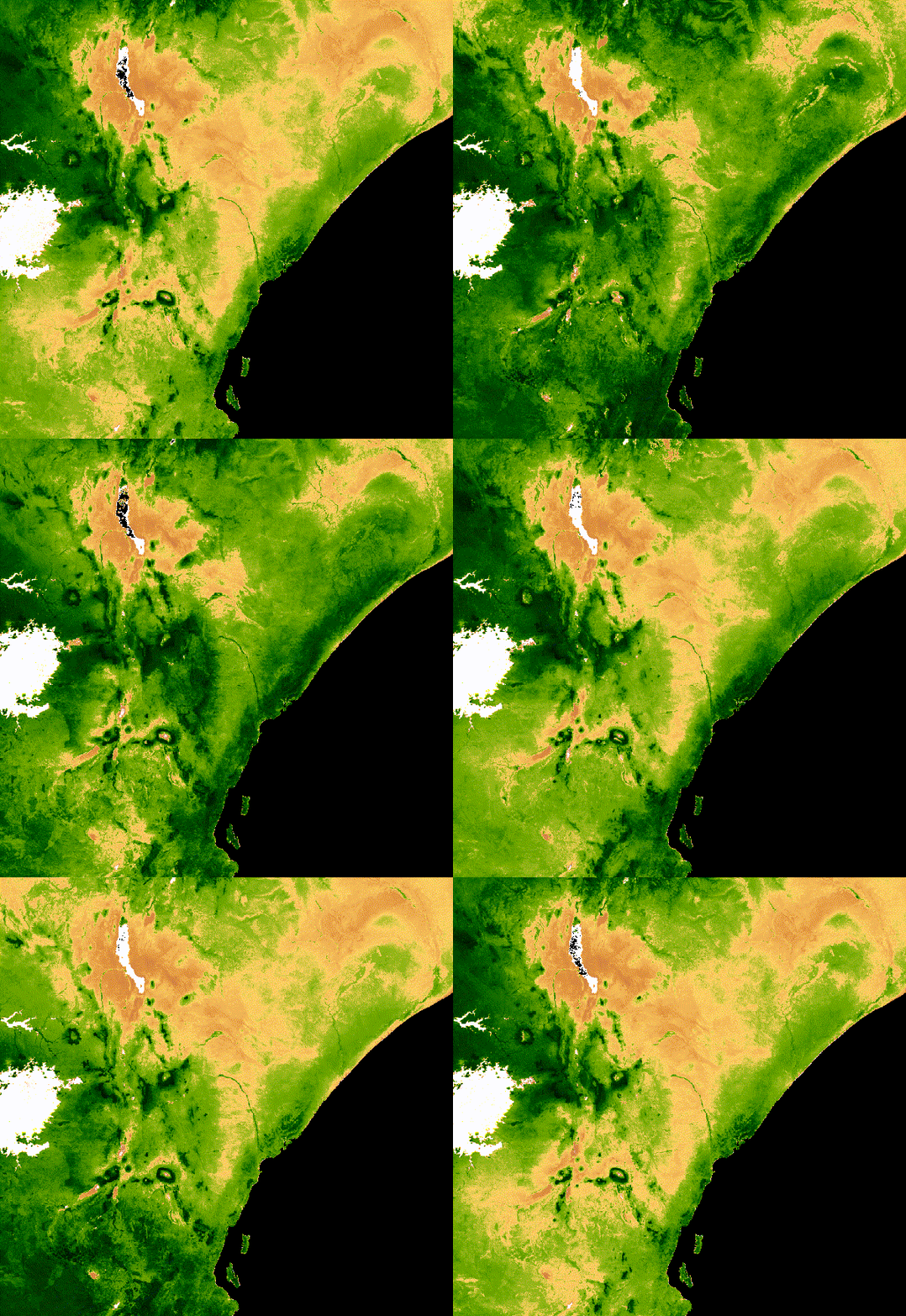
What is becoming more and more visible to anyone working in food security is the geographical regions where climate change are being most experienced are those that supply important conponents of European diets and insights into Eastern and Southern Africa food supply data using remote sensing (Oct 2019 – Oct 2022) emphasise this for fresh produce, coffee and tea exports
Southern Africa exert Oct 2019- Oct 2022 Wayne Martindale 31st October 2022

Eastern Africa exert Oct 2019- Oct 2022 -Wayne Martindale 31st October 2022
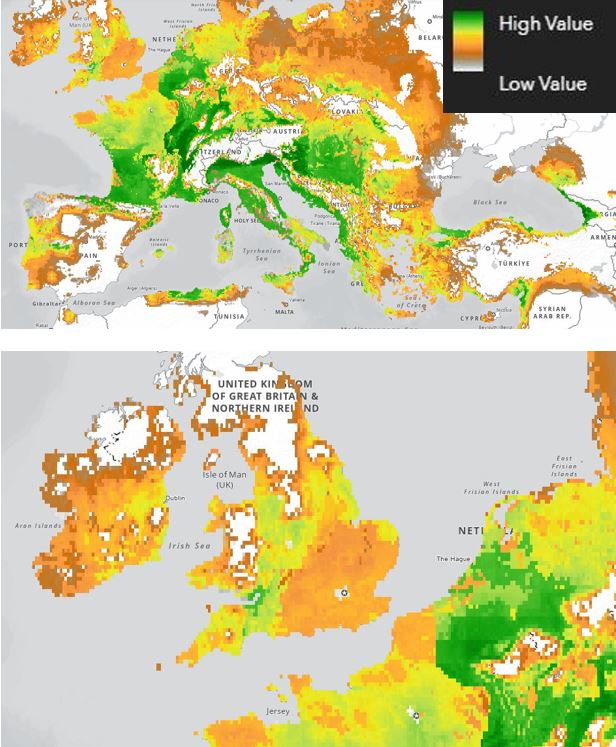
Adapt or fail? Future-climate needs to be on all commercial food supply chain risk registers
“Think oranges don’t grow in the UK? Give it 60 years.” Back when I was teaching agriculture and sustainability in the 2000s, I used to joke that Yorkshire wasn’t exactly the place for pineapples, mangoes, or oranges whenever someone asked why we couldn’t just eat local produce. But things change. I’ve been working with GAEZ4 data and if we continue on our current path, in around 60 years we could be growing oranges from Newcastle to Bristol — yielding 3 to 9 tonnes per hectare — along a limestone corridor that traditionally follows our breweries. Climate change isn’t just about rising temperatures or extreme weather — it’s about how we prepare, adapt, and act now.
Science fiction is as weird as real life- it is a sign of our times
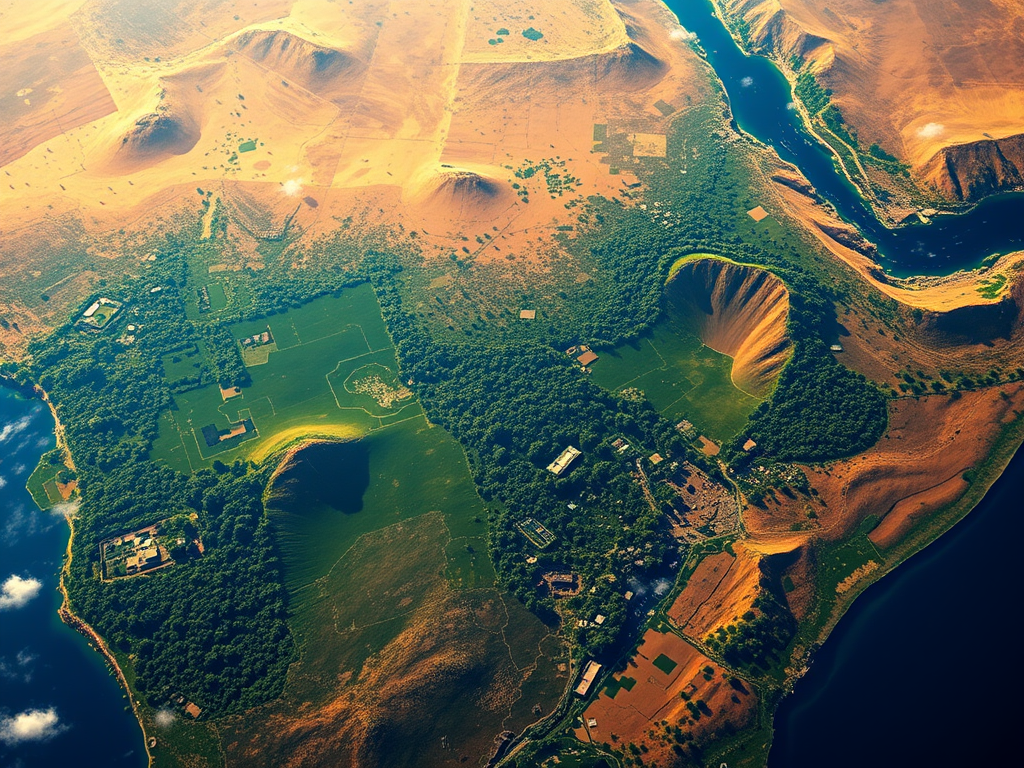
AI generated views of our future food system, Isaac Asimimov’s sentiment on such things was “science fiction is as weird as real life”, we wrote our vision for 2045 in 2020 and much of it became relaity by 2023!

 Dr Wayne Martindale, FIFST