If it was a business I think it would be a dark web betting shop- the need to change current methods of assessing UK food security risk. I realised this in 2013 in Delft
I was in Delft around 2013, at the Technical University in a rare earths conference, a food innovation expert at a rare earths conference? I saw the similarity with key food ingredient trade even back then. China and the Russian Federation had created a freefall in magnets and motors globally because they coud exert intense change by restricting rare earth metal exports. I knew the same thing could hapen with rice, soybean or maize ingredient movements. As for any tea, coffee and cocoa restrictions- well, that was the stuff f nightmares in normal gentile life. What surprised me then and now, is we are still shocked about connectivity of materials in our food supply. Yesterday, people seemed surprised that food requires fridges and the operation of these pieces of kit are critical to supply. As a heads up, overlooking this is an ‘in the headlights’ moment and it is the least of your problems. As a taster- over 70% of fresh fruit, and nearly all soybeans, rice, grain maize, and botanicals are imported to ensure year-round supply. That makes forecasting agricultural risk commercially critical.
GreenEye, a consultancy I am building to deliver security solutions has now built a suite of applications that translate long-term agricultural stress data into real-world sourcing intelligence. That means calibrating forward environmental risks to actual production outcomes and market trends.
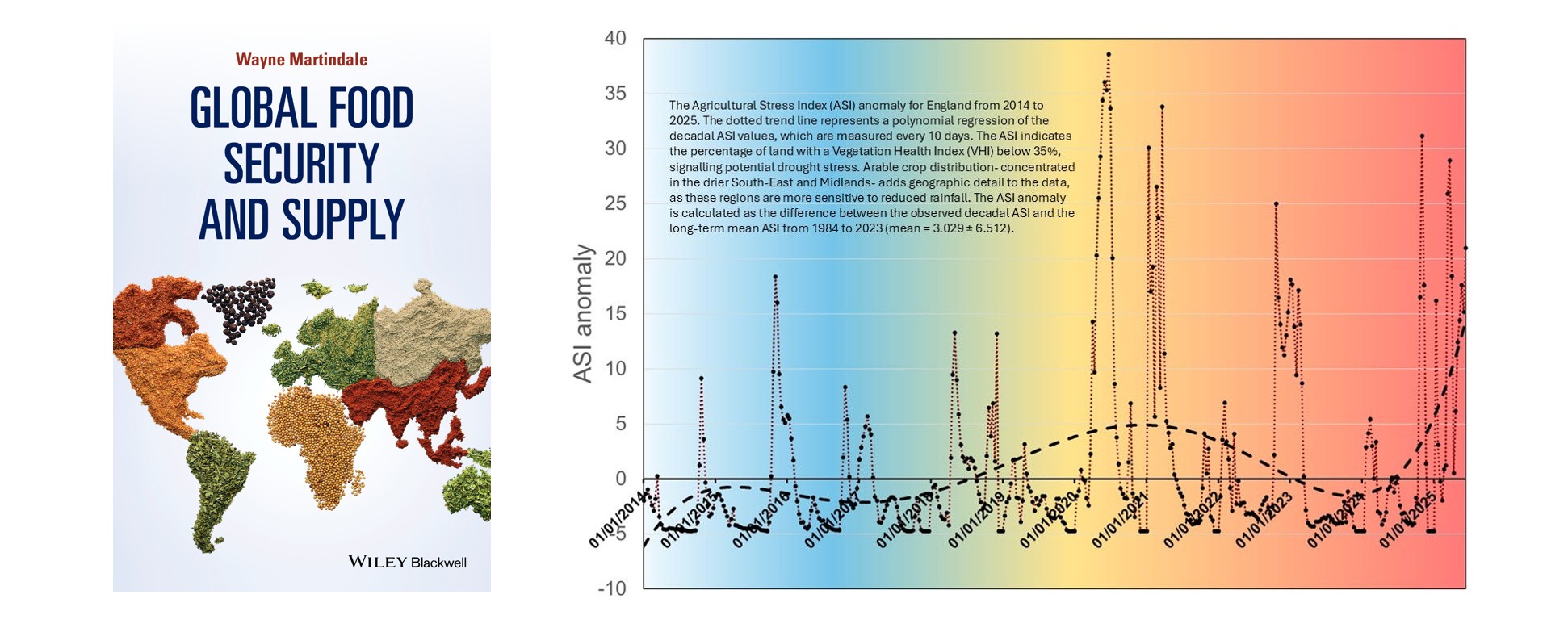
Take the UK as a case study here. Aside from armed conflicts and financial influencers of food security, the once latent impacts of climate change and resource depletion have become increasingly critical control points of future security. Our data shows an 18% likelihood that the agri-stress will exceed its long-term average—indicating rising pressure on key crops like wheat and oilseed rape. These crops dominate arable rotations in Eastern UK- our breadbasket, they offer a relatively controlled environment to test our models before tackling more complex import-heavy commodities like fresh produce and botanicals. The applications we have been testing show important carbon storage gaps or surplus between soils and different crops, we knew rotational planning is critical to do this but knowing when to do it over field rotation for best results is an edge.
What we’re seeing is a warning: volume and quality limits are starting to creak and crack. If we calibrate these indicators properly, they can unlock more strategic sourcing, smarter timing, and more sustainable procurement practices. Knowing what data can identify solutions is crucial to growers, importers, and processors- we have been working and collaborating with us in testing and refining this system.
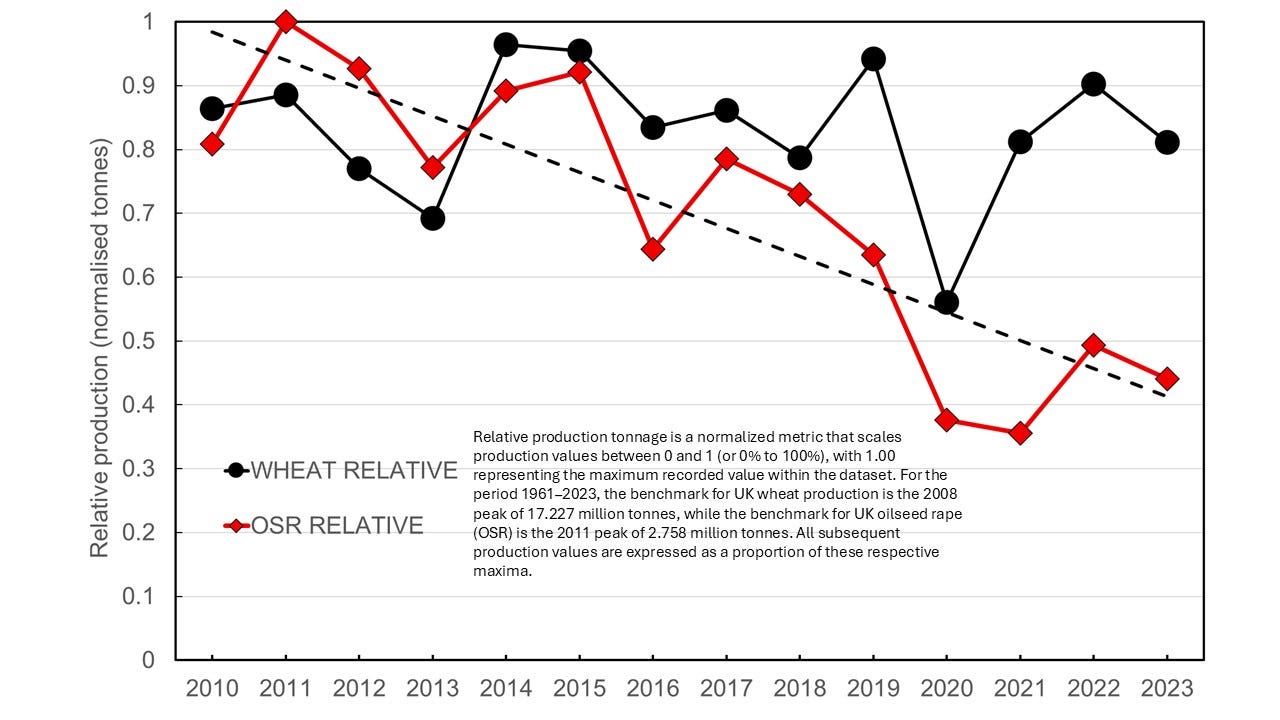
We know wheat and OSR production is decreasing- the trends continue to threaten the UK food and feed supply chains, a major driver for this decrease is agri-stress and what is thought to be unpredictable weather patterns. Long term open data demonstrate it is not unprojectable and the solutions are to adapt, consider different agronomy and to keep variety selection by farming enterprises at the front of decision making. Essentially it’s time to act, use data and get mapping.